Eight Colours, Not Four: Our New Vinyl Printer Reaches Colour CMYK Cannot
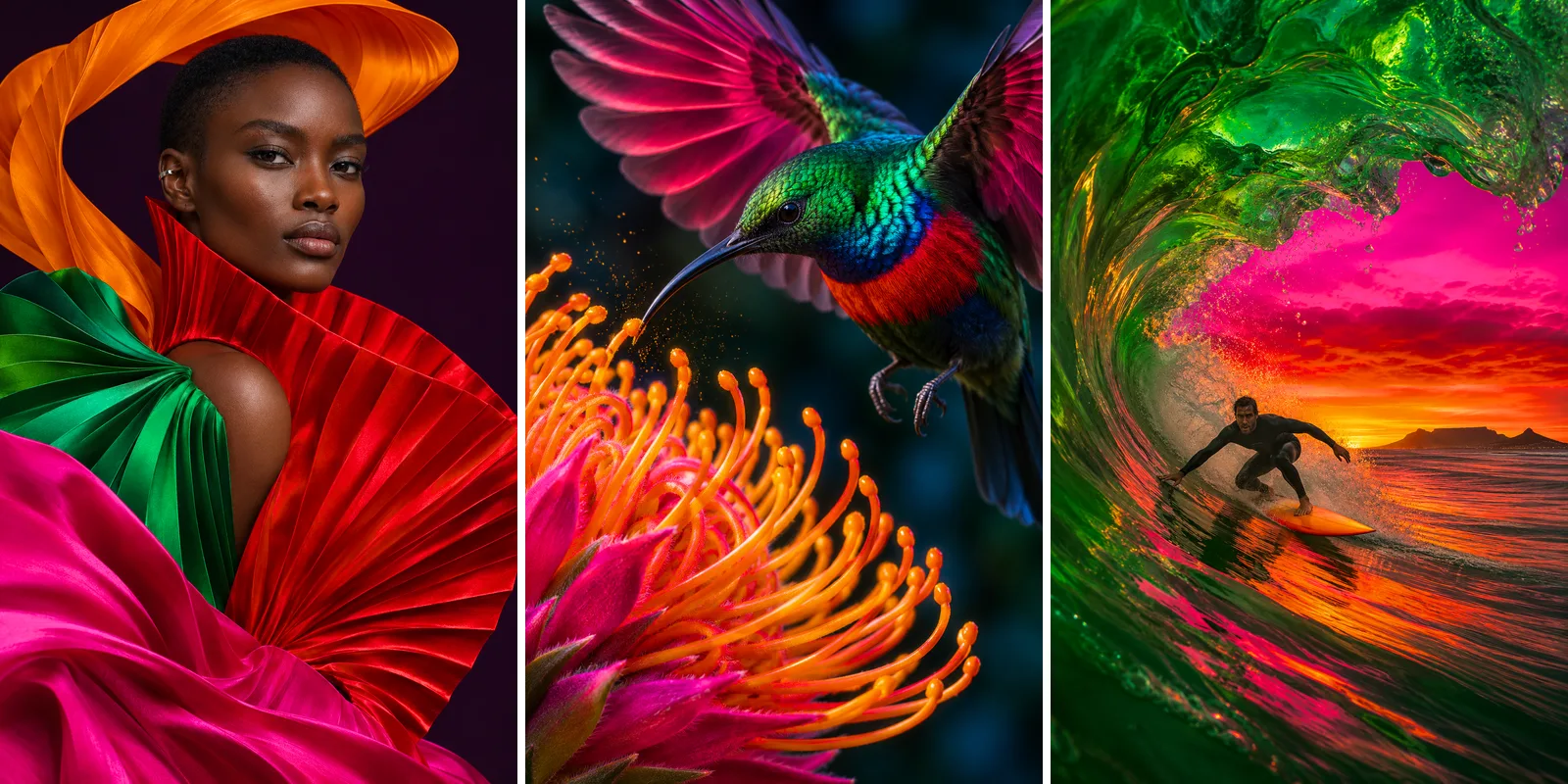
Almost every printed sticker, decal and window graphic you have ever seen was made with four inks: cyan, magenta, yellow and black. Four inks can mix a great many colours, but not all of them. The orange on your logo, the green on your packaging, the hot pink in your campaign: these are exactly the colours that four-colour printing struggles with, and they come off the press a little flatter than you designed them.
We have just changed that at 24HR Media. Our newest vinyl printer runs eight eco-solvent inks instead of four, and the extra four are there for one reason: to print colour that CMYK cannot reach. This post explains what that means in plain language, and shows nine colour studies we built to push the new machine as far as it will go.
A printer can only print the colours its inks can mix. That range is called its gamut, and eight inks give a wider gamut than four. Standard four-colour printing mixes everything from cyan, magenta, yellow and black, which dulls the most saturated oranges, greens, reds and pinks. Our new eight-colour vinyl printer adds four more inks, so vivid colour stays vivid, brand colours land closer to the Pantone reference, and photographs keep their depth. It is running in our Cape Town factory now, on printed vinyl for stickers, labels, decals and window graphics.
Four colours versus eight
Think of a printer's inks as a paint box. With four pots you can mix a lot, but every mixed colour is a little duller than a pot of that colour would be. Orange mixed from magenta and yellow is never as clean as orange ink. Green mixed from cyan and yellow never glows like green ink. The full set of colours a printer can make is its gamut, and every printer has an edge where the colour simply stops.
Four-colour printing has been the standard in the sign trade for decades, and for most work it is perfectly good. Its weak spot is saturated colour, which is also where brands tend to live. Industry estimates put standard four-colour process within reach of only about half of the Pantone spot colours that designers specify. The other half get approximated.
Eight-colour printers close that gap by adding inks, in two ways. Extra colour inks, such as orange, green and red, sit outside what CMYK can mix, so they push the edge of the gamut outward. Lighter inks print the soft tones that a four-colour machine has to build from scattered dots, so gradients, skies and skin look smooth rather than grainy.
| Four-colour (CMYK) | Eight-colour | |
|---|---|---|
| Inks | Cyan, magenta, yellow, black | CMYK plus four more |
| Bright orange, green, red and pink | Mixed from two inks, so they print flatter than the design | Reached with the extra inks, so they stay vivid |
| Brand colours | About half of Pantone spot colours are in reach | More of them are in reach, and the misses are closer |
| Gradients and photographs | Light tones built from scattered dots | Smoother transitions and more depth |
| Where it matters most | Text, flat colour and everyday signage print well | Logos, food, fashion, product and campaign work |
What a wider gamut does for your print
Nine studies built to test it
To see what the new printer can really do, we built nine colour studies at 300 × 450 mm. Each one is drawn in a colour space far larger than a screen can show, and each leans hard on the colours four-colour print finds difficult: molten orange, emerald green, ruby red, hot pink and deep blue. Two of them are close to home, a wet Bo-Kaap street under Table Mountain and a surfer inside a wave off the Cape.

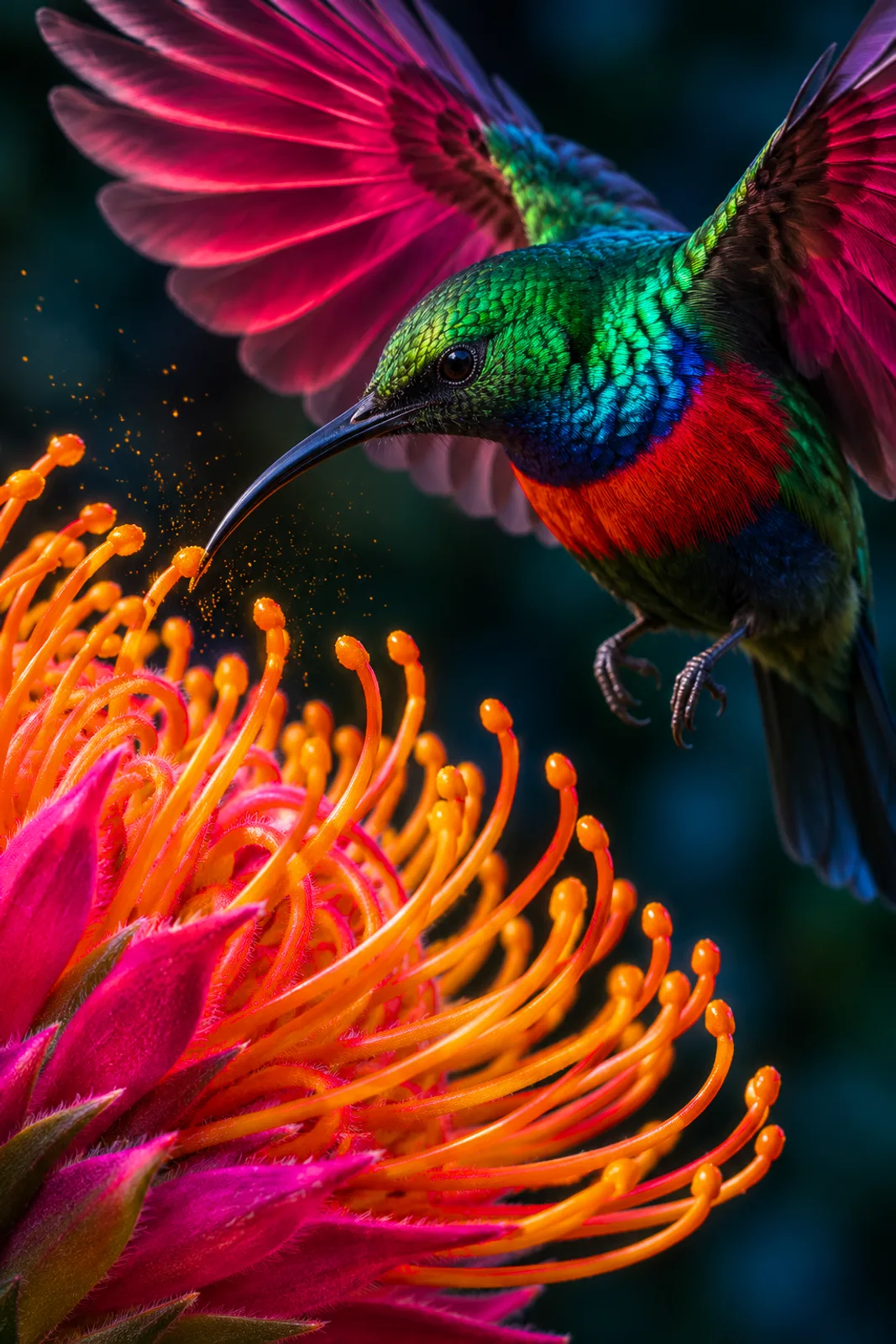
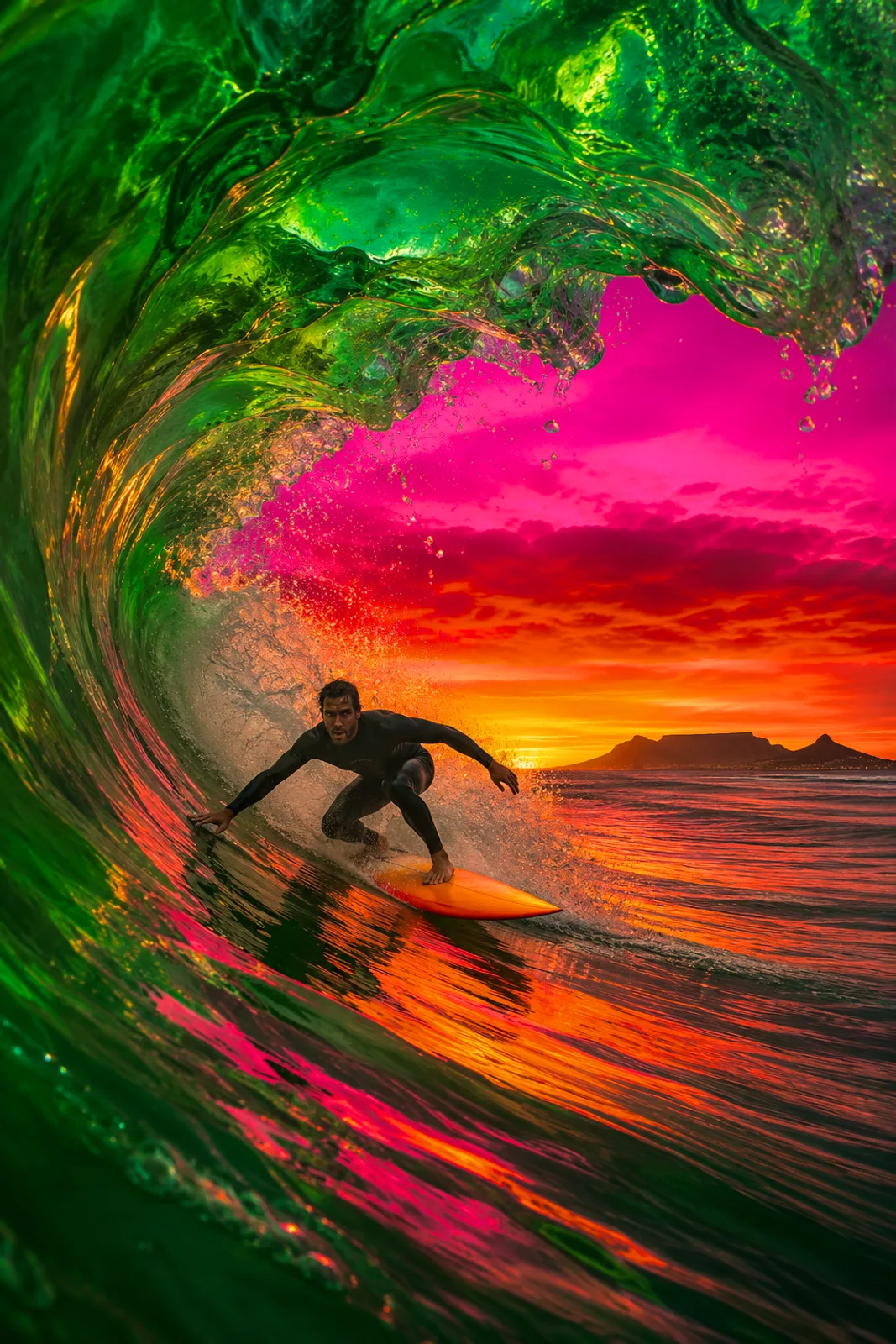
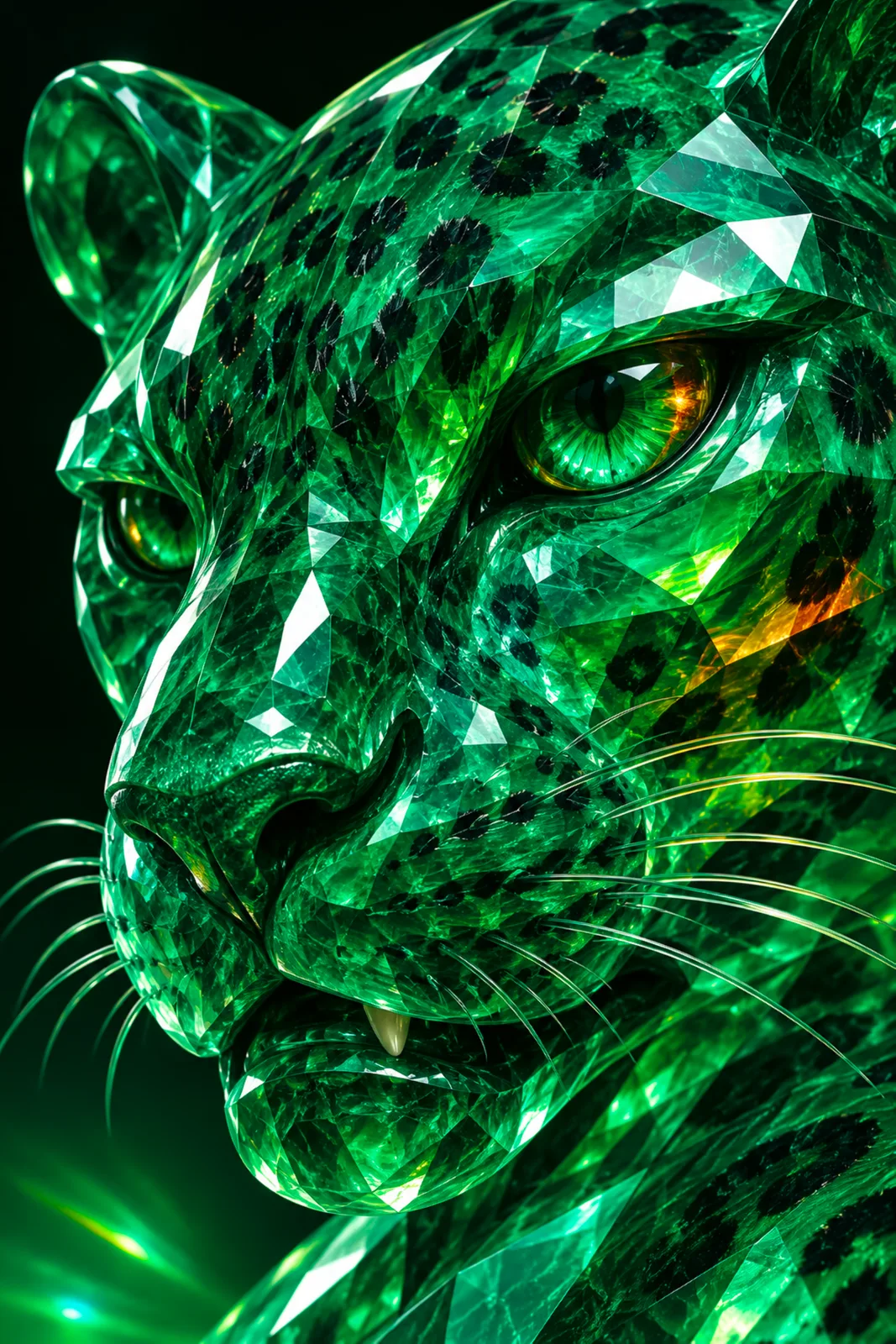
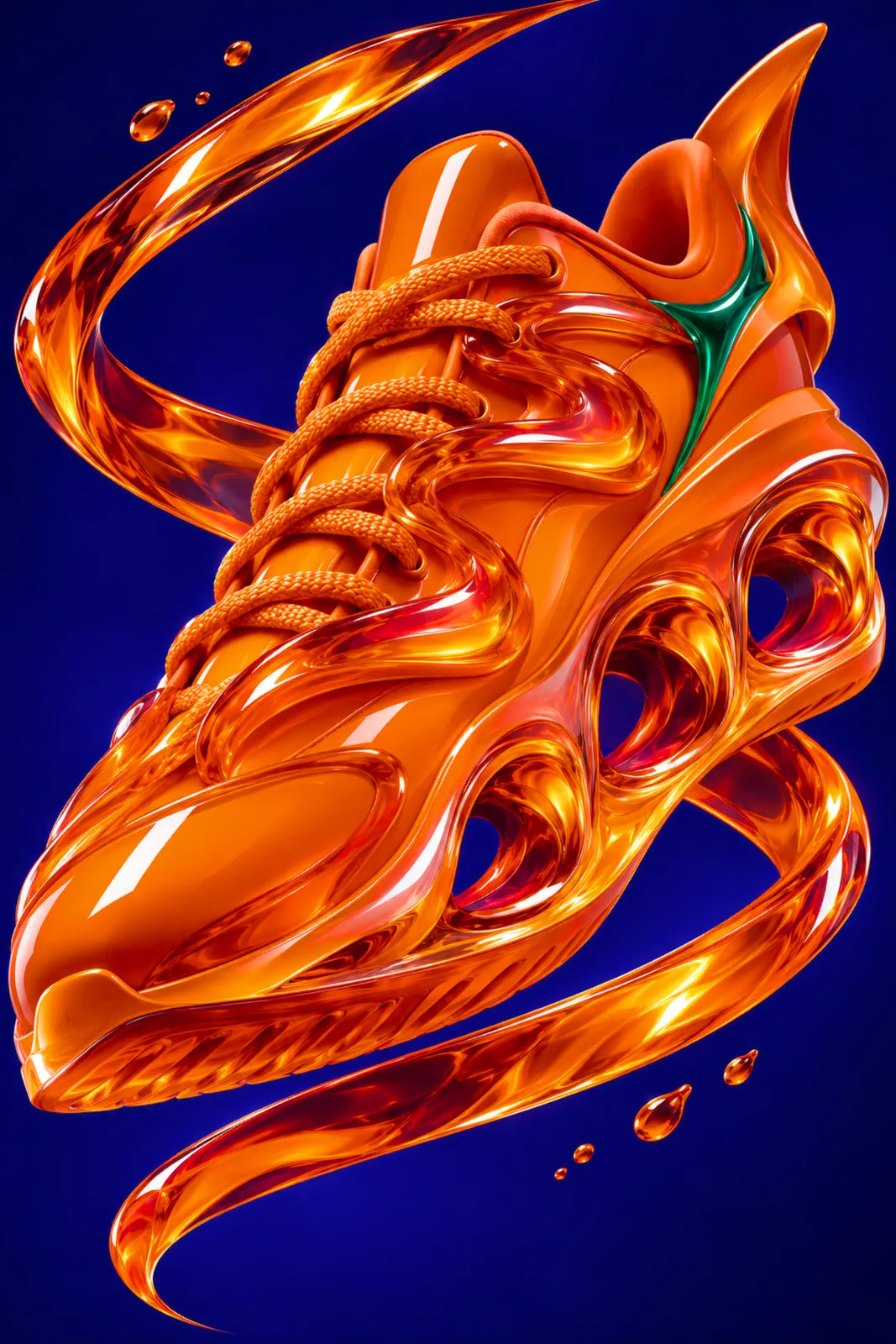
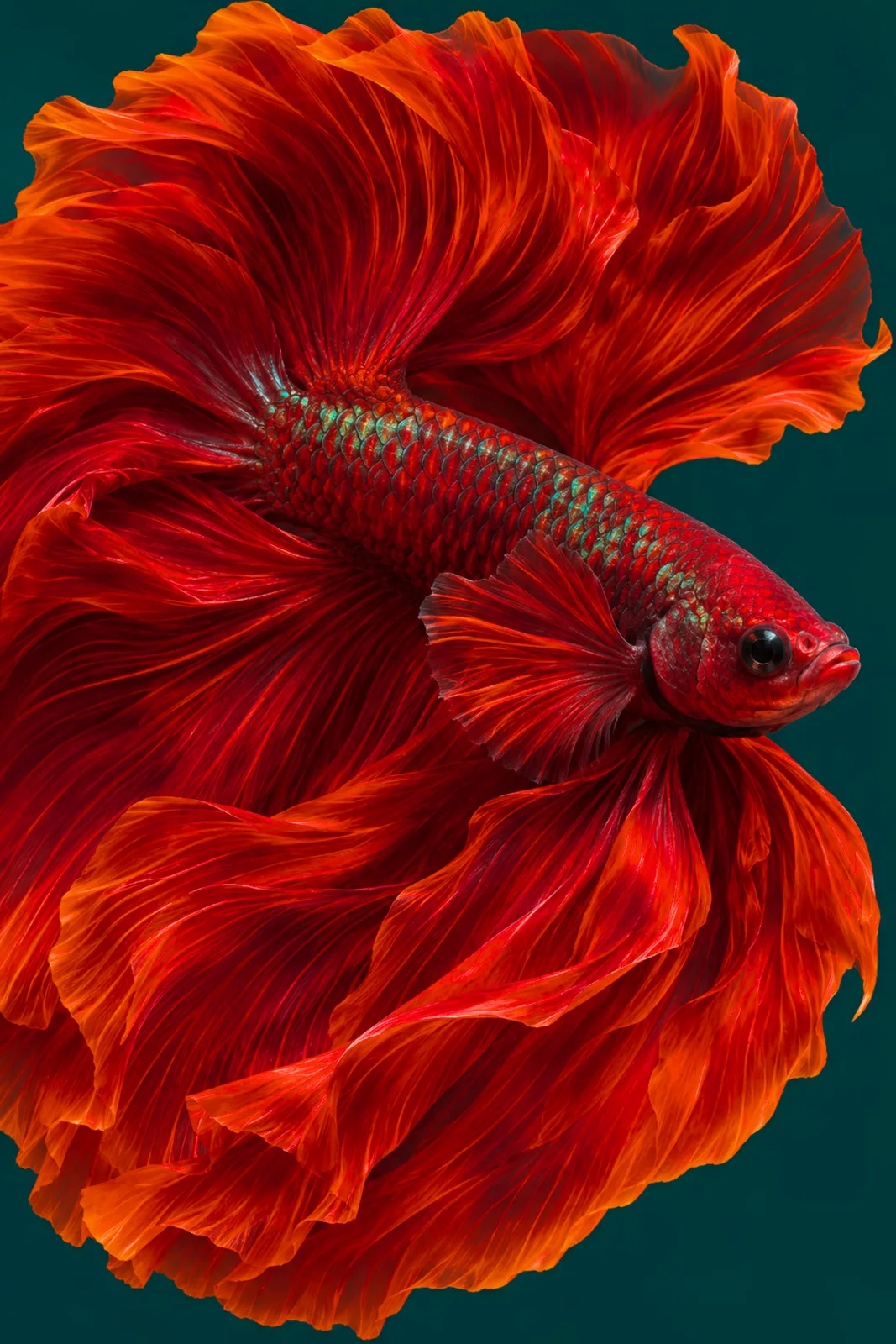
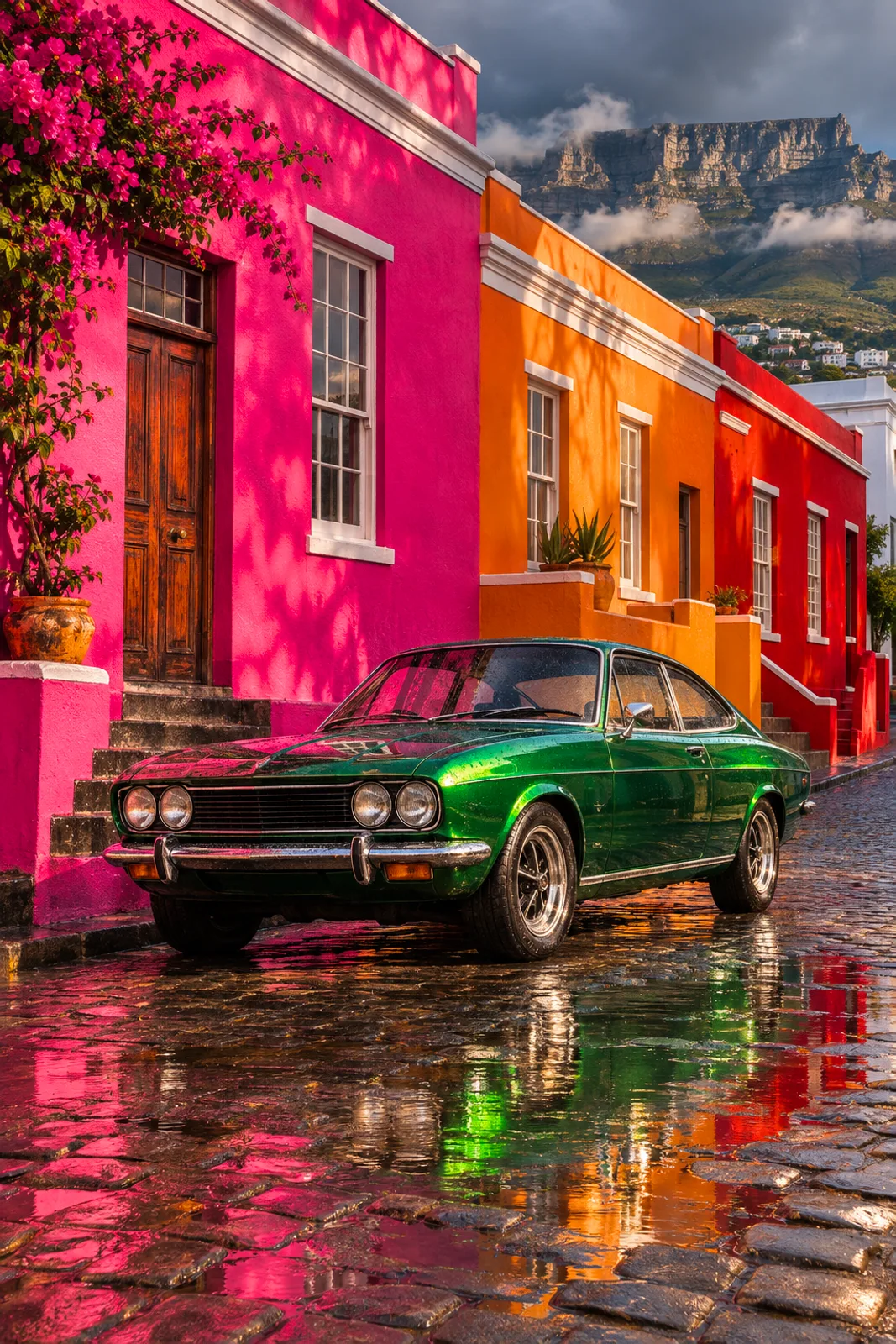
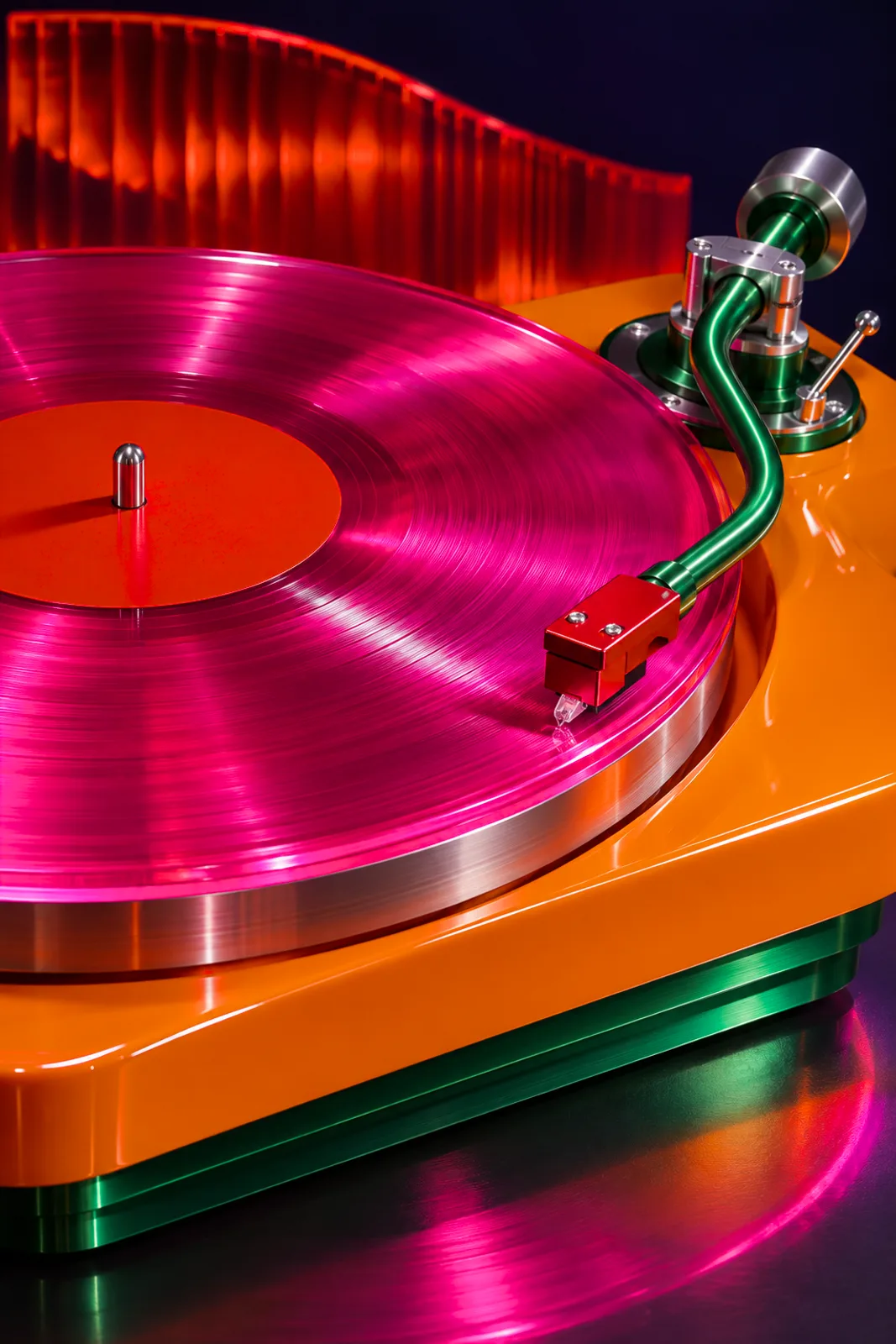
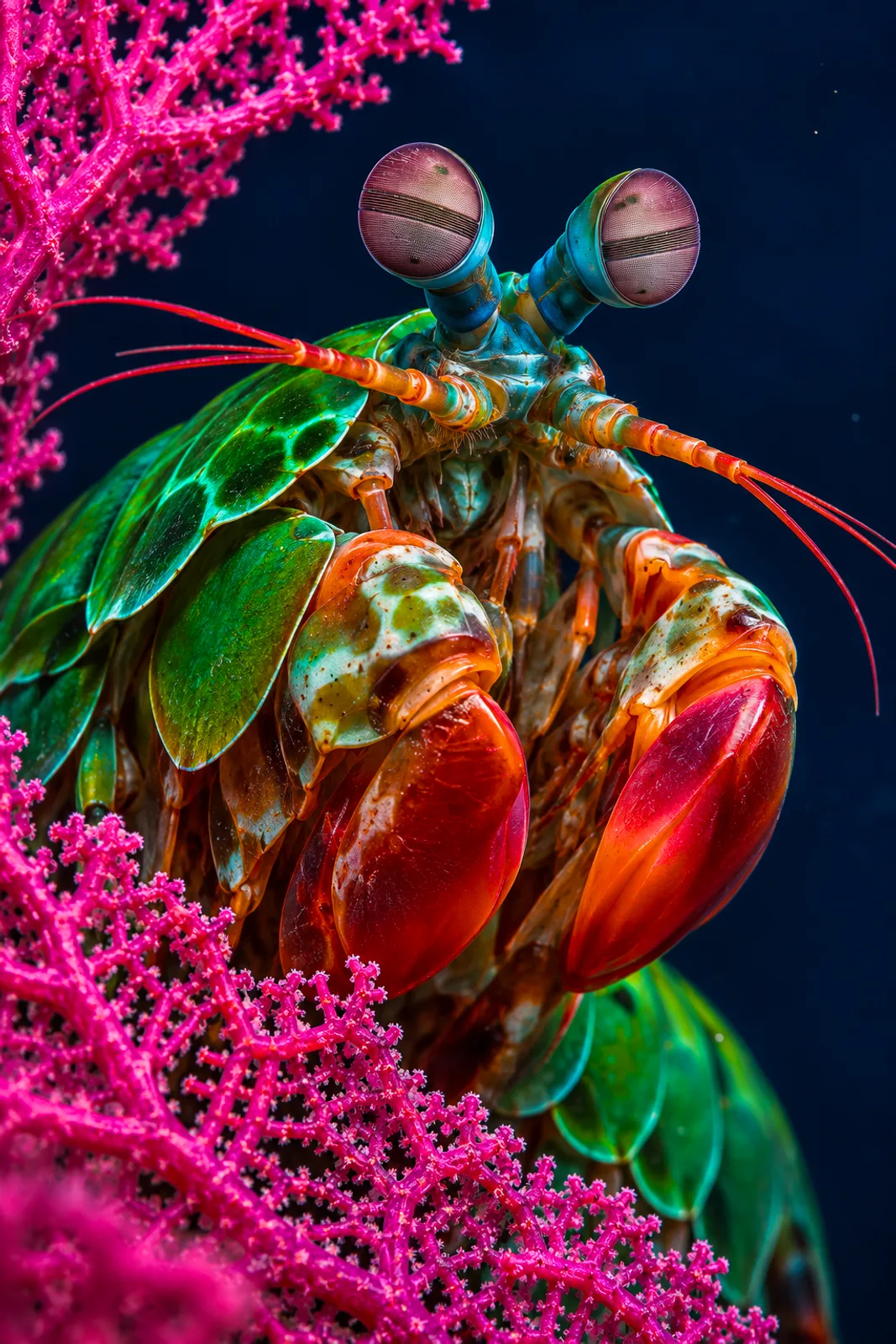
A confession about the pictures above. Your screen cannot show them properly. Screens and web images work in a standard range called sRGB, and we measured each study against it: between 22% and 82% of every picture is colour that sRGB cannot display. What you are looking at has been pulled back to fit your screen, in much the same way a four-colour printer has to pull colour back to fit its inks. The real difference only shows on vinyl, which is why the honest test is a print in your hand.
What we print on it
The new printer runs printed vinyl, which covers a large part of what leaves our factory:
- Product labels and personalised stickers, where shelf appeal depends on colour.
- Window decals and Contravision for shopfronts that have to stop people on the pavement.
- Wall and machine decals and floor decals for stores, offices and events.
- Car decals that carry a logo colour correctly from one vehicle to the next.
Everything is printed in-house, laminated where the job needs protection, and cut to shape on our digital cutters. If your work depends on a particular colour, tell us when you ask for a quote and we will plan the job around it.
Getting the most from it
A wider gamut only helps if the colour reaches the printer. Three habits make the difference:
- Give us your Pantone references. For logos and brand colours, name the Pantone colour rather than leaving us to guess from a screen. We match to the reference on the press, and for colour-critical work we recommend a colour-matched proof.
- Send us the original of anything vivid. Converting a bright photograph or illustration to a standard CMYK profile can throw away exactly the colour the new printer could have printed. If the job depends on vivid colour, send the original file alongside your print-ready version and ask us which to print from.
- Keep it vector where you can. Logos, text and flat shapes should be vector artwork, with photographs at full resolution for the printed size. Our Help Centre has the full artwork specifications, and our design studio can prepare the file for you.
One more thing worth knowing: if your design started as an AI-generated image, it will need work before any printer can do it justice. Our guide on why AI mockups are not print-ready explains why.
How we print in Cape Town
Everything is made at our factory in Atlas Gardens, Cape Farms, Cape Town. For the wider range of what we print, read our large format printing guide and our guide to labels, stickers and decals. Agencies and print brokers can put the new printer to work through our Reseller Partner Programme.
Frequently asked questions
What is an eight-colour printer?
A printer that carries eight inks instead of the standard four. Ours runs eco-solvent inks on vinyl. All colour printing starts with cyan, magenta, yellow and black. The extra four inks add colour that CMYK cannot mix and smooth out the tones it mixes poorly, so the printer can reproduce a wider range of colour.
What does gamut mean?
Gamut is the full range of colour a device can produce. A screen has one, a printer has another, and neither can show everything the eye can see. A wider gamut means more colours are in reach before the printer has to substitute the nearest one it can make.
Will my logo colour print more accurately?
More brand colours are in reach on eight inks than on four, and those that are still out of reach land closer. Give us the Pantone reference and tell us the colour is critical. Colour matching is a service we recommend for brand-conscious work, and it may carry an additional cost for the setup involved.
Why do the pictures on this page look normal on my screen?
Because your screen is the limit. The nine studies carry colour beyond what a standard screen can display, so the web versions have been reduced to fit. The difference between four and eight inks shows on the printed vinyl, not on a phone.
Is four-colour printing bad?
No. Four-colour printing is right for a great deal of work, including text, flat colour and everyday signage. Eight colours matter when the job depends on saturated colour, an exact brand colour, smooth gradients or photographic depth.
How should I supply artwork to benefit?
Name your Pantone references, keep logos and text as vector artwork, and for vivid photographs send the original file alongside your print-ready version so we can print from the one that holds the most colour. The full specifications are in our Help Centre.
Which products are printed on the new printer?
Printed vinyl: product labels, stickers, window decals, Contravision, wall and machine decals, floor decals and car decals. Ask us about any other product where colour is critical and we will tell you how it will be printed.
Can I see a sample before I order?
Yes. We can provide a sample of your printed material for approval before the full order runs. Depending on the size of the order, a sample fee may be charged.
Put eight colours to work on your brand
Send us your artwork and your Pantone references, and tell us the product and the size. We will quote it, proof it, and print it on eight inks in our Cape Town factory.
Request a quote